Gender and Inclusion Gaps
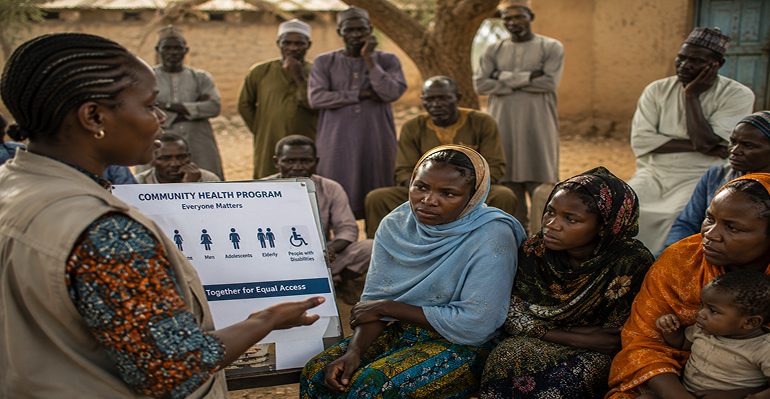
Program Category: Gender, Equity & Social Inclusion
Designing health programs that leave no one behind.
Program Overview
Health outcomes are shaped by gender, social norms, power, access, and inclusion. When health programs do not intentionally address these realities, women, girls, adolescents, and marginalized groups can be left behind.
CBHGAPS works to close gender and inclusion gaps by integrating gender analysis, equity, equality, mainstreaming, sex-disaggregated data, gender-sensitive design, and GEDSI-focused practices into health programming.
Program Details
| Program Area: | Gender-Intentional Programming / GEDSI |
| Location: | Nigeria |
| Status: | Active |
| Implemented by: | CBHGAPS |
| Focus Groups: | Women, girls, adolescents, underserved groups, CSOs, health programs, and community structures |
Program Priorities
- Gender-Intentional Design: Supporting programs that respond to the needs and realities of different groups.
- GEDSI Capacity: Strengthening internal and partner capacity for gender equality, disability, and social inclusion.
- Gender Technical Assistance: Providing support for gender mainstreaming in immunization and other priority health programs.
- Inclusive Leadership: Promoting gender-responsive policies, leadership, training, and strategic planning.
Equitable healthcare must be intentionally designed
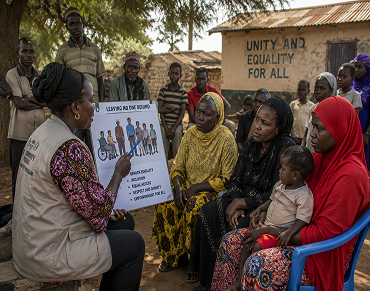
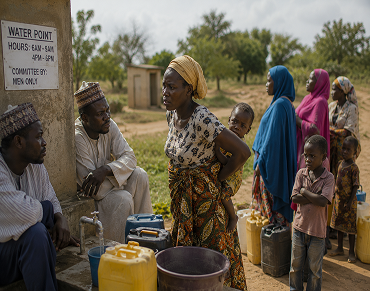
Gender and inclusion gaps are often hidden in the way programs are planned, delivered, and measured. Without intentional design, some groups may face greater barriers to information, services, leadership, and decision-making.
CBHGAPS integrates gender into its work through gender analysis, equity, equality, mainstreaming, sex-aggregated data, and gender-sensitive implementation. The organization also supports gender technical assistance, GEDSI capacity building, and gender 50/50 self-assessment processes for civil society organizations.
Summary
This program helps close gender and inclusion gaps by ensuring that health programs are responsive, equitable, inclusive, and intentionally designed to meet the needs of diverse communities.
Key Activities
- Gender analysis and mainstreaming
- Gender-sensitive program design
- Sex-disaggregated data use
- GEDSI capacity strengthening
- Gender technical assistance
- CSO self-assessment and improvement planning
- Support for inclusive policies, leadership, and practices
Interested in advancing gender and inclusion in health programs?
Partner with CBHGAPS to design and strengthen inclusive programs that leave no one behind.
Send Program Enquiry