Information as a Health Intervention: The Case for Rights-Based SRH Education
- by CBHGAPS Team
- 0 comments
Information as a Health Intervention: The Case for Rights-Based SRH Education
Information as a Health Intervention: The Case for Rights-Based SRH Education
In public health, we often focus on medicines, facilities, and trained professionals. But for millions of adolescents and young people across Nigeria, the most urgent gap is not a missing drug or a closed clinic — it is the absence of accurate, safe, and rights-based sexual and reproductive health (SRH) information.
When people lack access to reliable SRH information, the consequences are real and measurable: delayed care-seeking, increased vulnerability to unintended pregnancy, higher rates of sexually transmitted infections, and a reduced ability to make decisions that protect long-term health and wellbeing.
Why the Information Gap Persists
Stigma, cultural silence, and weak service linkages continue to limit SRH information access — particularly for adolescents, young women, and communities in underserved areas. Many young people receive fragmented or inaccurate information from informal sources, while formal channels remain inaccessible, judgmental, or difficult to reach.
The result is a gap between what people need to know and what they are actually able to access — a gap that CBHGAPS believes can and must be closed.
The Rights-Based Approach
CBHGAPS approaches SRH education from a rights-based framework. This means recognising that every person — regardless of age, gender, location, or background — has the right to accurate health information, respectful services, and the freedom to make informed decisions about their own body and health.
This approach guides everything from the language we use in community sessions to the way we design outreach programs and train facilitators.
Our Work in Practice
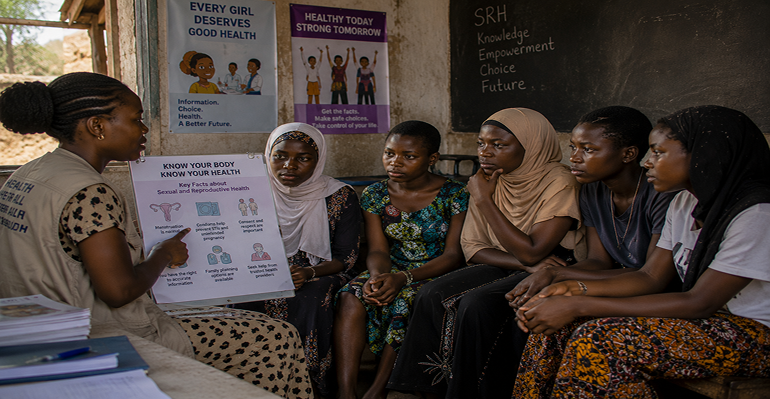
Through our Sexual and Reproductive Health Information Gaps program, CBHGAPS delivers:
- Community dialogue sessions that create safe spaces for open, respectful conversations about SRH
- Adolescent and youth-focused engagement that meets young people where they are
- Rights-based health messaging through community networks, health workers, and partner organisations
- Linkages to quality SRH services so that informed decisions can be followed by appropriate care
Moving Forward
Information alone does not solve every health challenge — but without it, no other intervention can reach its full potential. At CBHGAPS, we are committed to ensuring that knowledge is no longer a barrier to health.
We invite health professionals, community leaders, donors, and advocates to join us in expanding access to the information that every person deserves.
Get in touch with our team to learn more about our SRH programs and partnership opportunities.